Why Does My Middle Tennessee Crawl Space Smell Musty?
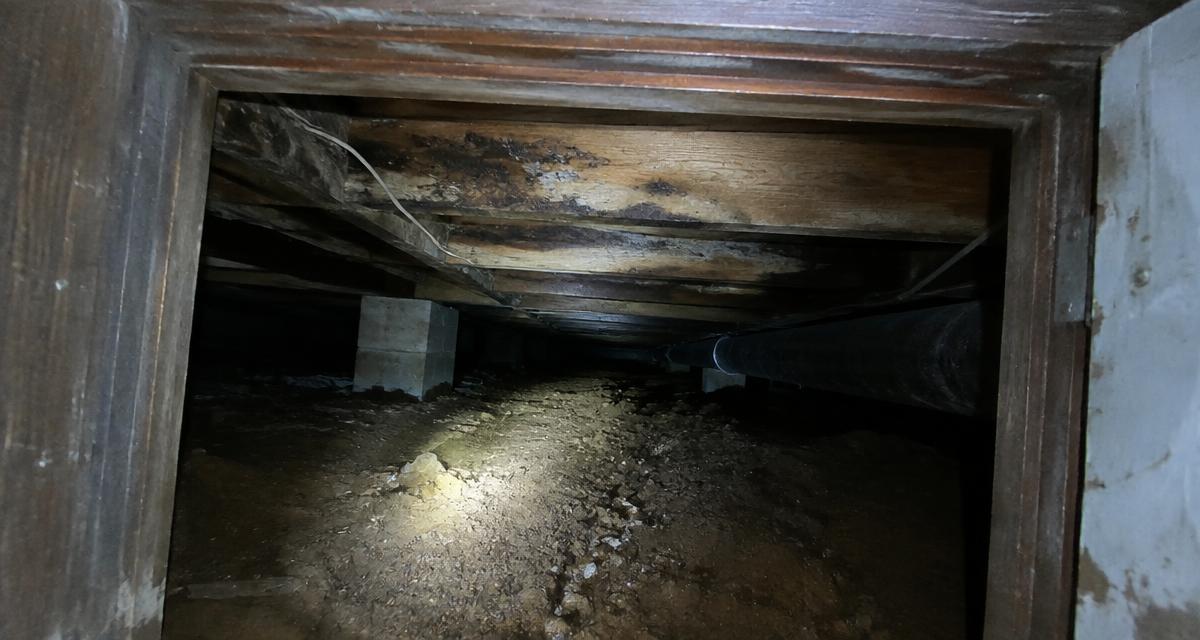
A musty odor is a warning to look for moisture. It does not identify a mold species, prove that mold is toxic, or tell you which repair to buy. The useful question is: where is the moisture entering, and why is it not drying?
What causes a musty crawl space smell?
Common sources include bare earth, plumbing leaks, rainwater at the foundation, clogged gutters, short downspouts, humid outdoor air entering vents, wet insulation, condensate problems, or poorly sealed ducts. More than one source can exist.
Tennessee Department of Health guidance is direct: mold needs moisture to grow, and controlling the moisture source is the priority. The department does not recommend routine mold testing as a substitute for fixing damp conditions. Tennessee Department of Health: mold
Is it safe to enter the crawl space?
Do not enter when there is standing water near wiring, outlets, HVAC equipment, or unknown utilities; when sewage may be present; when framing appears unstable; or when the access is unsafe. Avoid disturbing visible growth or damaged insulation without appropriate protection. A qualified inspector can document conditions without turning an odor complaint into unnecessary demolition.
What can a homeowner check from outside?
- Do gutters overflow or discharge beside the foundation?
- Does soil slope toward the house?
- Are crawl-space vents blocked, damaged, or visibly wet?
- Does the odor intensify after rain or during humid summer weather?
- Is the HVAC condensate line draining correctly?
- Are there indoor stains, cupped floors, or swollen trim above the crawl space?
- Is the water meter moving when all fixtures are off?
Record weather, odor timing, and visible changes. Photos and humidity readings over several days are more useful than a single guess.
Why is this common in Middle Tennessee?
Middle Tennessee receives substantial rainfall and experiences humid warm-season air. The National Weather Service has documented the region's heavy-precipitation patterns, including events capable of overwhelming drainage. NWS heavy-precipitation climatology
DOE Building America research found that vented crawl spaces in humid climates can admit moisture and that properly designed closed, conditioned crawl spaces can reduce humidity. DOE: unvented conditioned crawl spaces That does not mean every house should simply have its vents sealed; bulk water, combustion safety, termites, drainage, insulation, and HVAC design must be considered together.
Who should diagnose it?
Start with an independent home inspector or building-science professional when the source is uncertain. Use a licensed plumber for supply, drain, sewer, or condensate leaks. Use a foundation or waterproofing contractor for drainage, vapor barriers, sump systems, or structural moisture damage. Use an HVAC contractor for sweating ducts, disconnected ducts, or equipment drainage.
Browse foundation and waterproofing professionals and ask each provider to separate diagnosis, water-source correction, drying, and optional upgrades in the proposal.
Do you need a mold test?
Usually, a test does not answer the practical question. Tennessee health guidance says visible mold and moisture should be addressed regardless of species, and indoor humidity should generally be controlled. Tennessee mold testing FAQ
Testing may be appropriate in a specific medical, legal, or post-remediation protocol, but a sales test should not replace a moisture investigation. Ask what decision the result would change.
What should a complete repair plan address?
A credible plan explains bulk-water drainage, ground moisture, air leakage, humidity control, plumbing and HVAC sources, damaged materials, drying verification, and future monitoring. Encapsulation is not a substitute for repairing a pipe or redirecting roof runoff. A dehumidifier is not a substitute for removing standing water.
Ask for before-and-after humidity or moisture readings, product details, drain destination, service access, termite-inspection provisions, and warranty exclusions. Do not accept a proposal based only on odor.
This guide provides general information and cannot identify the source in a particular home.
Foundation & Waterproofing by town
The MidTen Homeowner
Enjoyed this guide? Get the next one.
Your guide to owning, maintaining & improving your Middle Tennessee home — one useful email a week, free.
No spam. Free. Unsubscribe anytime in one click.
Need a pro for this?
Browse Middle Tennessee contractors by job type or town — free, no sign-up.