Crawl Space Encapsulation or a Dehumidifier: Which Does Your Home Need?
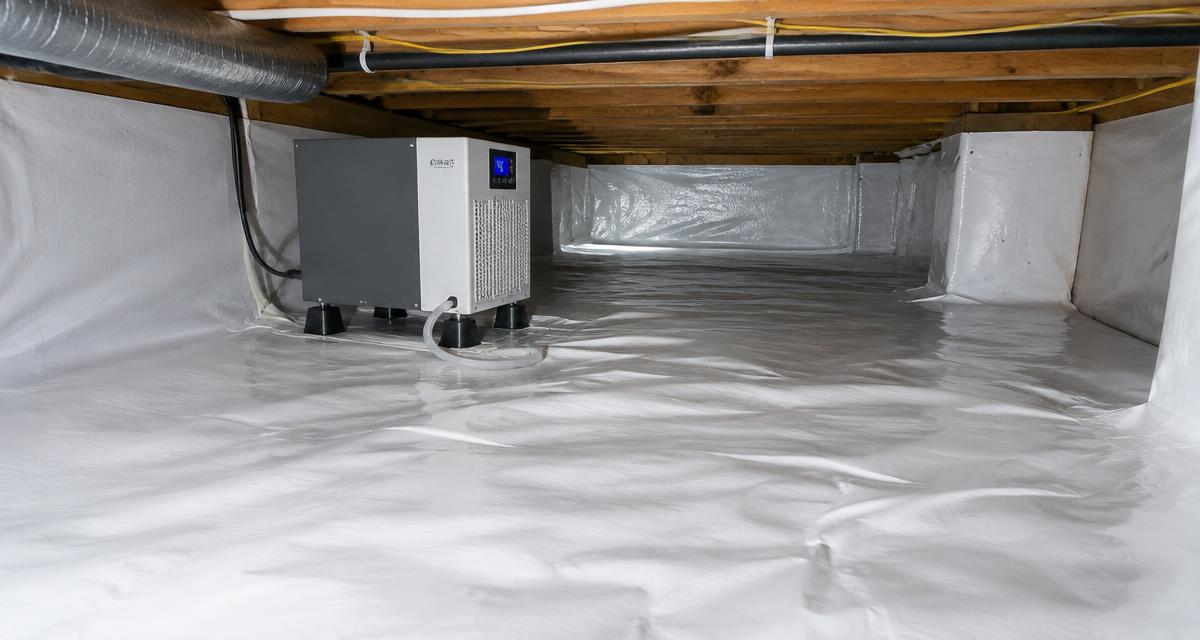
Encapsulation and dehumidification are not interchangeable. Encapsulation changes how ground moisture and outdoor air reach the crawl space. A dehumidifier removes water vapor from air. Many durable systems use both—but only after leaks and bulk water are corrected.
What does crawl-space encapsulation do?
A complete encapsulation commonly seals exposed soil with a durable vapor barrier, seals seams and penetrations, closes or controls vents as designed, addresses walls and piers, and integrates drainage, insulation, termite access, and conditioned air or dehumidification. Simply laying thin plastic on the ground is not the same system.
DOE guidance treats moisture control, airtight construction, and continuous insulation as connected parts of a durable crawl space. DOE crawl-space insulation fact sheet
What does a dehumidifier do?
A correctly sized unit removes moisture from the air and drains the condensate. It does not repair a plumbing leak, redirect a downspout, stop groundwater, or seal humid outdoor air leaks. In an open, wet crawl space, it may run continuously while the source remains.
ENERGY STAR says certified dehumidifiers use about 20% less energy than conventional models with the same moisture-removal capacity. ENERGY STAR dehumidifiers Efficiency matters, but source control matters more.
Which should come first?
Use this sequence:
- 1Correct roof runoff, grading, plumbing leaks, and standing water.
- 2Evaluate combustion appliances, radon considerations, pests, termites, ductwork, and local code requirements.
- 3Choose the crawl-space boundary: properly vented and isolated from the house, or closed and conditioned as a designed system.
- 4Install the vapor, air, and thermal controls for that design.
- 5Add dehumidification if monitoring shows it is needed.
- 6Verify drainage and humidity over changing seasons.
Encapsulation over standing water can conceal rather than solve it. A dehumidifier without air and vapor control can waste energy.
Why does Middle Tennessee climate matter?
Middle Tennessee combines frequent rainfall with humid warm-season air. Tennessee's Healthy Homes program identifies keeping homes dry and thermally controlled as core health principles. Tennessee Healthy Homes
DOE Building America research found that properly closed, conditioned crawl spaces in humid regions reduced crawl-space humidity and, in studied homes, reduced heating and cooling energy compared with vented crawl spaces. DOE crawl-space research Those results do not justify sealing every crawl space without a building-specific design.
When might a dehumidifier alone be reasonable?
It may be a targeted solution when bulk water is absent, the air and vapor boundaries are otherwise sound, humidity is the remaining problem, and there is a reliable drain and maintenance plan. Ask for a load calculation or sizing method rather than a unit selected only by square footage.
When is encapsulation worth evaluating?
Evaluate a full system when bare ground, humid air entry, wet insulation, recurring condensation, musty odors, or ducts in the crawl space indicate interacting moisture and air-control problems. The proposal should explain how the crawl space will dry if water enters, how it will be inspected, and whether termite inspection gaps are required.
DOE's conditioned-crawl-space job aid specifically notes durable air sealing, sealed seams, insulation, vapor control, fire safety, and termite inspection details. DOE conditioned crawl-space job aid
What should you ask before signing?
- What measured moisture condition are we correcting?
- Where does bulk water go?
- Which surfaces are sealed, insulated, or left accessible?
- How is humidity controlled and monitored?
- Where does condensate drain?
- What happens during a power outage?
- How are combustion safety and radon considered?
- Can termite inspectors see the required areas?
- What maintenance and warranty exclusions apply?
Compare Middle Tennessee foundation and waterproofing professionals, and request written diagnoses rather than sales labels.
This guide does not prescribe a system for a specific house; crawl-space design should account for the whole building.
Foundation & Waterproofing by town
The MidTen Homeowner
Enjoyed this guide? Get the next one.
Your guide to owning, maintaining & improving your Middle Tennessee home — one useful email a week, free.
No spam. Free. Unsubscribe anytime in one click.
Need a pro for this?
Browse Middle Tennessee contractors by job type or town — free, no sign-up.